
WhatsApp chatbot vs AI calling agent: which to choose?
WhatsApp chatbot vs AI calling agent: which one your business needs, when text beats voice, what each costs, and when to run both together.
By CINEM Team
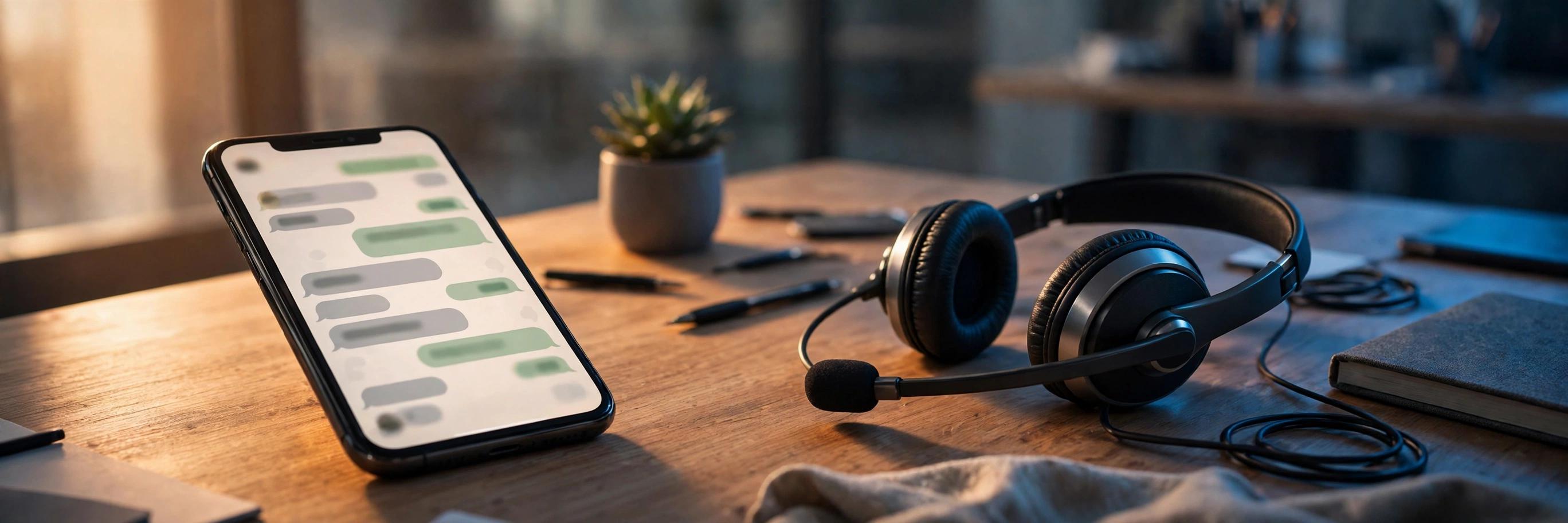
A customer who cannot reach you is a customer you have already lost, and today they reach you in two ways: they message you on WhatsApp, or they ring you. Both are worth answering well, but the tool that answers each one is different. A WhatsApp chatbot answers messages in text, instantly, on the number your customers already use. An AI calling agent answers the phone in a natural voice, talks to the caller, and books or takes a message. This guide compares the two directly: what each one does best, what each one costs, and how to choose, because the wrong choice is a common and expensive mistake.
The short answer
Choose a WhatsApp chatbot if your customers mostly message you: on WhatsApp, on your website, or on social media. It starts from $999 setup plus $299 per month with CINEM, it can send links, photos, menus and order forms, and it suits customers who prefer to read and reply in their own time. Choose an AI calling agent if your customers mostly ring you, or if your business loses bookings because calls go unanswered after hours or while your team is busy. It starts from $1,499 setup plus $399 per month. Many businesses end up with both, sharing the same knowledge, prices and booking rules, so the customer gets the same answer whether they call or message. If you want the general comparison without the WhatsApp angle, our related post Chatbot or calling agent? Choosing the right AI front door covers the same choice across channels, and our related post WhatsApp chatbots for business: costs, setup and limits covers the WhatsApp side in detail.
The core difference: text vs voice
The difference between the two tools is not only the channel, it is the way a customer thinks. A WhatsApp chatbot works in text, which means the customer can read the answer, look at a photo or a price list, tap a link, and reply when they are ready. Text is patient. A customer can start a conversation on the bus, leave it for an hour, and come back to it later without losing anything. That makes a chatbot ideal for enquiries that need detail: a menu, a catalogue, a price list, a set of options to choose from, or an order the customer wants to think about. Voice works differently. A phone call is immediate and personal, and it suits the customer who wants an answer now, not a message thread. A caller who is driving, a caller who is older or less comfortable typing, or a caller with an urgent need, such as a booking today or a breakdown, will ring rather than type. The calling agent talks to them in a natural voice, asks the questions they need, and finishes the job in a minute or two. Neither is better in general. The right one is the one that matches how your customers already reach you, and that is a question you can answer by looking at your own phone: which rings more, the calls or the WhatsApp messages.
When a WhatsApp chatbot wins
A WhatsApp chatbot wins whenever your customers live on WhatsApp, and in many businesses that is most of them. It wins for shops and stores, because a customer can browse products, ask about a price, place an order and pay, all in the same chat, with photos and links along the way. It wins for service businesses that get the same questions all day, because the chatbot answers them instantly and only passes the serious enquiries to a person. It wins for bookings that need a customer to choose from options, such as a time slot, a package or a service, because those choices are easier to tap than to say out loud. And it wins for follow-up, because a chatbot can send a reminder, a confirmation, a delivery update or a new offer on WhatsApp, and the customer reads it when they are ready. The chatbot also has a practical advantage: it is cheaper, it is simpler to set up, and it produces a written record of every conversation that your team can read and learn from. If most of your customer contact is already on WhatsApp, the chatbot is the obvious first step, and it will probably pay for itself in the first month.
When an AI calling agent wins
An AI calling agent wins whenever the phone is the channel that matters, and there are businesses where it clearly is. It wins for clinics, salons, restaurants and service businesses where customers ring to book, because a caller who wants an appointment today will not wait for a message reply. It wins after hours, when your team has gone home but customers are still ringing, because the agent answers every call, books the appointment, and your team finds the booking in the morning. It wins for missed calls, which are the most expensive calls a business gets: a customer who rings, gets no answer, and rings your competitor instead is a customer you never knew you lost. And it wins for customers who prefer to talk, especially older customers, customers who are driving, or customers whose enquiry is complicated and easier to explain out loud than to type. The calling agent also wins in one situation a chatbot cannot help with: the customer who does not know what to ask. On a call, the agent can guide them with questions and work out what they need, while a chatbot waits for the customer to type the right thing. If your phone rings more than your WhatsApp buzzes, start with the calling agent.
What each one costs
The prices are close enough that cost should not decide the choice, but it is worth knowing the numbers. A WhatsApp chatbot from CINEM starts from $999 setup plus $299 per month. The setup covers the configuration, your answers and knowledge, the WhatsApp and website connections, and testing. The monthly cost covers the conversations, hosting, updates and support. An AI calling agent starts from $1,499 setup plus $399 per month. The setup is higher because it covers the phone system connection, the voice configuration, the calendar connection and more testing, including test calls with difficult callers. The monthly cost is higher because voice calls cost more to run than text messages. Both are far cheaper than hiring a person to answer the same volume, and both are priced as a service, not a one-off, because they need to be kept up to date as your prices, services and hours change. If you want the detail on chatbot pricing alone, our related post How much does an AI chatbot cost in 2026? breaks it down, and our related post What is an AI calling agent? How it answers and books explains the calling side in full.
Running both together
The best answer for many businesses is not one or the other, but both, working as one system. The chatbot handles messages, the calling agent handles calls, and both share the same knowledge: the same services, the same prices, the same opening hours, the same booking rules. A customer who messages on WhatsApp and a customer who rings get the same answer, the same booking options, and the same confirmation, and your team sees every conversation and every call in one place. This matters because customers do not use one channel, they use whichever is convenient at the time. A customer who messages in the morning may ring in the afternoon, and if the two systems do not share information, that customer has to explain themselves twice, which is exactly the experience that sends them to a competitor. Running both together costs $999 setup plus $299 per month for the chatbot, and $1,499 setup plus $399 per month for the calling agent, and the setup is done together, so the knowledge is built once and used in both places. If your budget only allows one to start with, choose the channel your customers use most today, and add the second one when the first is paying for itself, which it usually does within a few months.
Frequently asked questions
Should I choose a WhatsApp chatbot or an AI calling agent?
Look at how your customers reach you today. If most of them message you on WhatsApp, choose the chatbot first. If most of them ring you, or if you lose bookings because calls go unanswered, choose the calling agent first. Many businesses end up with both, sharing the same knowledge and booking rules.
How much does each one cost?
A WhatsApp chatbot from CINEM starts from $999 setup plus $299 per month. An AI calling agent starts from $1,499 setup plus $399 per month. Both are priced as a service, because they need to be kept up to date as your prices, services and hours change.
Can the chatbot and the calling agent share the same information?
Yes, and they should. When both are set up together, they share the same services, prices, hours and booking rules, so a customer gets the same answer whether they call or message. Your team sees every conversation and every call in one place.
Will customers know they are talking to an AI?
On WhatsApp, the chatbot replies instantly and clearly, and most customers care about getting an answer, not about who wrote it. On a call, the voice sounds natural, and a good system is honest about what it is and hands the caller to a person whenever they ask. Both systems hand over to a person whenever the customer needs one.
What happens if a customer asks something the AI cannot answer?
It should say so honestly and hand the conversation or the call to a person, with the full context attached, so your team can reply without asking the customer to start over. A good system never invents a price or a promise. The handover rules are set during setup, so your team decides which situations always go to a person.
If you are not sure which one your business needs, it is worth an honest look at how your customers actually reach you. Tell CINEM at hello@cinem.tech how many calls and how many WhatsApp messages you get in a day, what your customers usually ask, and when your enquiries go unanswered. We will tell you honestly whether a chatbot, a calling agent, or both is the right first step, and price it with the running costs included.