
Food delivery app cost: what restaurants really pay
Food delivery app cost explained: customer app, rider app, restaurant dashboard and payments priced honestly, plus the aggregator commission maths.
By CINEM Team
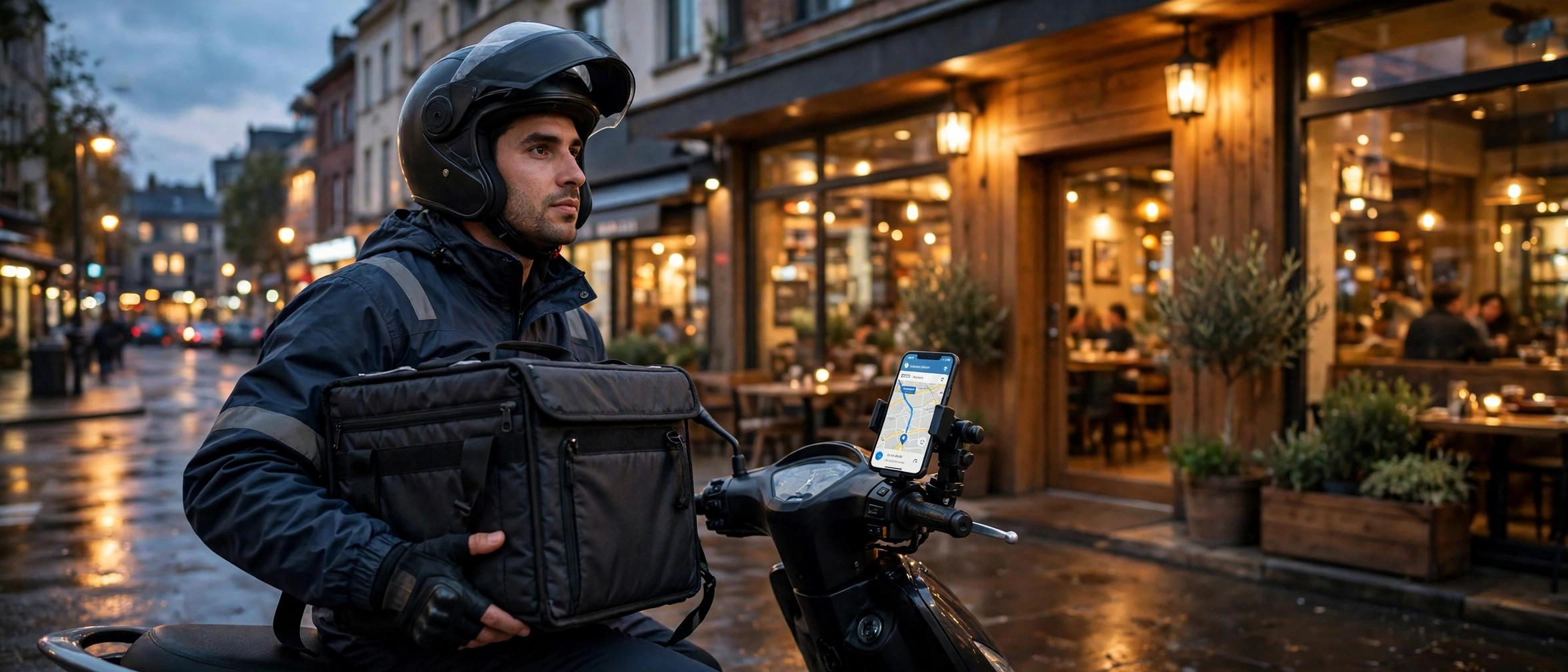
A restaurant owner who sells through a delivery aggregator pays for every order, twice. First in the commission, which is usually 20 to 30 percent of the order, and then in the customer, who belongs to the aggregator, not to the restaurant. The customer orders from the app, the app keeps the data, and the restaurant never learns who they are, what they like, or how to bring them back. That is why more restaurants are asking about their own delivery app: a customer app, a rider app, and a dashboard for the kitchen, all under their own name. The question is what it costs, and whether it pays. This guide prices a food delivery app honestly, and does the commission maths so you can decide for yourself.
The short answer
A food delivery app costs $7,999 to $15,000 or more to build, depending on whether it is one restaurant or a marketplace of many, plus $200 to $600 a month to run. A single-restaurant app, with ordering, payments, rider tracking and a kitchen dashboard, sits at the lower end. A multi-restaurant marketplace, with restaurant onboarding, commission splits, and a rider fleet, sits at the higher end and beyond. At CINEM, custom software starts at $2,999 for a focused build, $7,999 for a Standard system, and from $15,000 for a full platform, and a delivery app is a Standard-to-platform build, not a simple website. The honest rule: your own app pays when your delivery volume is high enough that the commission you save covers the build and the running costs, which for most busy restaurants happens within a year. If you want the wider picture on restaurant websites, our related post Restaurant website cost: what a restaurant should pay covers the website, and our related post How much does it cost to make an app in 2026? covers app pricing generally.
The three apps inside one delivery app
A food delivery app is not one app. It is three, and understanding that is the only way to judge a price. The first is the customer app, where people browse the menu, place an order, pay, and track it. It needs good photos, a menu that is easy to change, offers and discounts, and a checkout that works on a cheap phone with a slow connection, because that is the phone many customers use. The second is the rider app, where the delivery rider sees the order, navigates to the restaurant and then to the customer, and marks the delivery complete. It needs live maps, and it needs to work reliably, because a rider who cannot see the order cannot deliver it. The third is the restaurant dashboard, where the kitchen sees new orders the moment they arrive, accepts or rejects them, updates the preparation time, and marks them ready for pickup. It also shows the reports the owner actually reads: how many orders, which dishes sell, and what the average order value is. If a quote prices only the customer app, it is not a delivery app. It is a menu with a checkout, and the restaurant will still be taking orders by phone, which defeats the purpose.
The commission maths that decides everything
The decision to build your own app comes down to one calculation, and it is worth doing with your own numbers. Take your monthly delivery sales through the aggregator, and multiply by the commission, which is usually 20 to 30 percent. A restaurant doing $10,000 a month in delivery sales at 25 percent commission pays $2,500 a month to the aggregator, which is $30,000 a year. Your own app costs, say, $12,000 to build and $400 a month to run, which is $4,800 a year, plus the payment fees on each order, which are around 3 percent, or $300 a month on $10,000 of sales. The first year costs $12,000 plus $4,800 plus $3,600 in payment fees, which is $20,400, against $30,000 in commission, a saving of nearly $10,000 in year one, and a saving of over $20,000 a year from year two onwards, because the build is already paid for. That is the maths that makes the decision, and it is why busy restaurants build their own apps. The catch is that your own app does not bring you customers by itself. The aggregator brings you discovery, and your own app does not, so you have to bring customers to it: a card in every delivery bag, a QR code on every table, a WhatsApp message to every past customer, and an offer for the first order through your own app. The restaurants that succeed are the ones that market their own app as hard as they cook. An AI chatbot from CINEM, at $999 setup plus $299 per month, can take orders and answer customer questions on WhatsApp, which is where many restaurant customers already are, and it can send them straight to your own app.
What drives the price up or down
Four things decide where your delivery app lands in the range. The first is single restaurant or marketplace. One restaurant, one menu, one kitchen, is a straightforward build. A marketplace, many restaurants, each with their own menu and their own dashboard, with commission splits and payouts, is a platform, and it costs accordingly, because every feature has to work for many businesses, not one. The second is payments. Card payments are standard, but cash on delivery, wallets, and local payment methods each add work, and the payment setup has to be right, because a payment that fails is an order that never happens. The third is the map and the rider system. Live tracking, estimated delivery times, and rider assignment, the system that decides which rider gets which order, are the most technically demanding parts, and they are also the parts that matter most to the customer, because nobody likes waiting for food without knowing where it is. The fourth is the menu and offers system. A menu that the restaurant can change itself, in minutes, with photos, options, and daily specials, is essential, because a menu that needs a developer to change is a menu that never changes, and a delivery app with a stale menu loses customers. Tell any developer these four things before you ask for a price, and the quote you get back will be honest, because the developer will know what you actually need.
The running costs after launch
The build is a one-off cost, but a delivery app has running costs, and they should be in the budget from the start. Hosting and the map service cost $100 to $300 a month for a typical restaurant app, because the map is used on every order and the map provider charges for it. Payment fees are around 3 percent of every order, which is the same as any online payment, and far less than the aggregator commission. Maintenance, updates, backups and security, costs 15 to 25 percent of the build price per year as a rule of thumb, so a $12,000 app costs roughly $150 to $250 a month to keep properly maintained. Then there is the cost of keeping customers coming back: offers, push messages, and the WhatsApp follow-up that reminds a customer to order again, which is where the app earns its keep, because a customer who orders from your app is your customer, and you can reach them again without paying commission. At CINEM, Care retainers are $499, $1,499 or $3,999 per month, and they cover hosting, security, updates, monitoring and ongoing improvement as one service. The cost to avoid is the app nobody downloads. Budget for the launch, for the cards in the bags, the QR codes on the tables, and the first-order offer, because an app with no customers is the most expensive app of all.
How to get a delivery app right
The restaurants that get value from their own app all do the same three things. First, they keep the first version small. The best delivery apps start with ordering, payment, rider tracking, and the kitchen dashboard, and add loyalty, offers, and reviews later, once customers are actually using the app. A big-bang launch, where everything arrives at once and the kitchen has not been trained on any of it, is the most common way a good app fails. Second, they train the kitchen and the riders properly, because an app is only as good as the people using it, and a kitchen that does not accept orders in the app will keep taking them by phone, which defeats the purpose. Third, they market the app relentlessly, because the app does not market itself. A card in every bag, a QR code on every table and every receipt, a WhatsApp message to every past customer, and a real reason to use the app, such as free delivery on the first order, or a discount that the aggregator does not offer. If your customers mostly call to order, an AI calling agent from CINEM, from $1,499 setup plus $399 per month, can answer those calls, take the order, and send it to the kitchen, which is the same job the app does, for the customers who prefer to talk. The channel matters less than the result: the order reaches the kitchen, the customer knows where it is, and the restaurant keeps the customer.
Frequently asked questions
How much does a food delivery app cost?
A food delivery app costs $7,999 to $15,000 or more to build. A single-restaurant app sits at the lower end, and a multi-restaurant marketplace sits at the higher end and beyond. At CINEM, custom software starts at $2,999 for a focused build, $7,999 for a Standard system, and from $15,000 for a full platform. Running costs are $200 to $600 a month plus payment fees of around 3 percent.
Is it cheaper than using a delivery aggregator?
Usually, yes, once your delivery volume is high enough. At 25 percent commission, a restaurant doing $10,000 a month in delivery sales pays $2,500 a month to the aggregator. Your own app costs $200 to $600 a month to run plus payment fees, so the saving is large, but only if you bring customers to your own app, because the aggregator brings you discovery and your app does not.
How long does it take to build a food delivery app?
A single-restaurant app takes eight to sixteen weeks. A multi-restaurant marketplace takes four to six months. The biggest factor is not the coding, it is how clearly the restaurant can describe its menu, its delivery areas, and its kitchen process before the build starts.
Do I need separate apps for customers, riders and the restaurant?
Yes, in effect. A delivery system has three parts: a customer app, a rider app, and a restaurant dashboard. They are built together as one system, but they are used by three different people, and each one has to be simple enough for its user.
Can customers pay by cash on delivery?
Yes, and in many markets most customers prefer it. Cash on delivery, card payment, and local wallets can all be offered, but each one adds work to the build, so decide which payment methods you need before you ask for a price.
If you run a restaurant and the aggregator commission is eating your margin, and you want your customers to be your customers, it is worth an honest conversation before you spend anything. Tell CINEM at hello@cinem.tech how many delivery orders you take, what you pay in commission, and how your kitchen works today. We will do the commission maths with you, and price a delivery app that fits, from a Standard system at $7,999 to a full marketplace from $15,000, with the running costs included.