
AI chatbots for ecommerce: carts, support and repeat orders
AI chatbots for ecommerce recover abandoned carts, answer order questions and bring customers back on WhatsApp — what they do and what they cost.
By CINEM Team
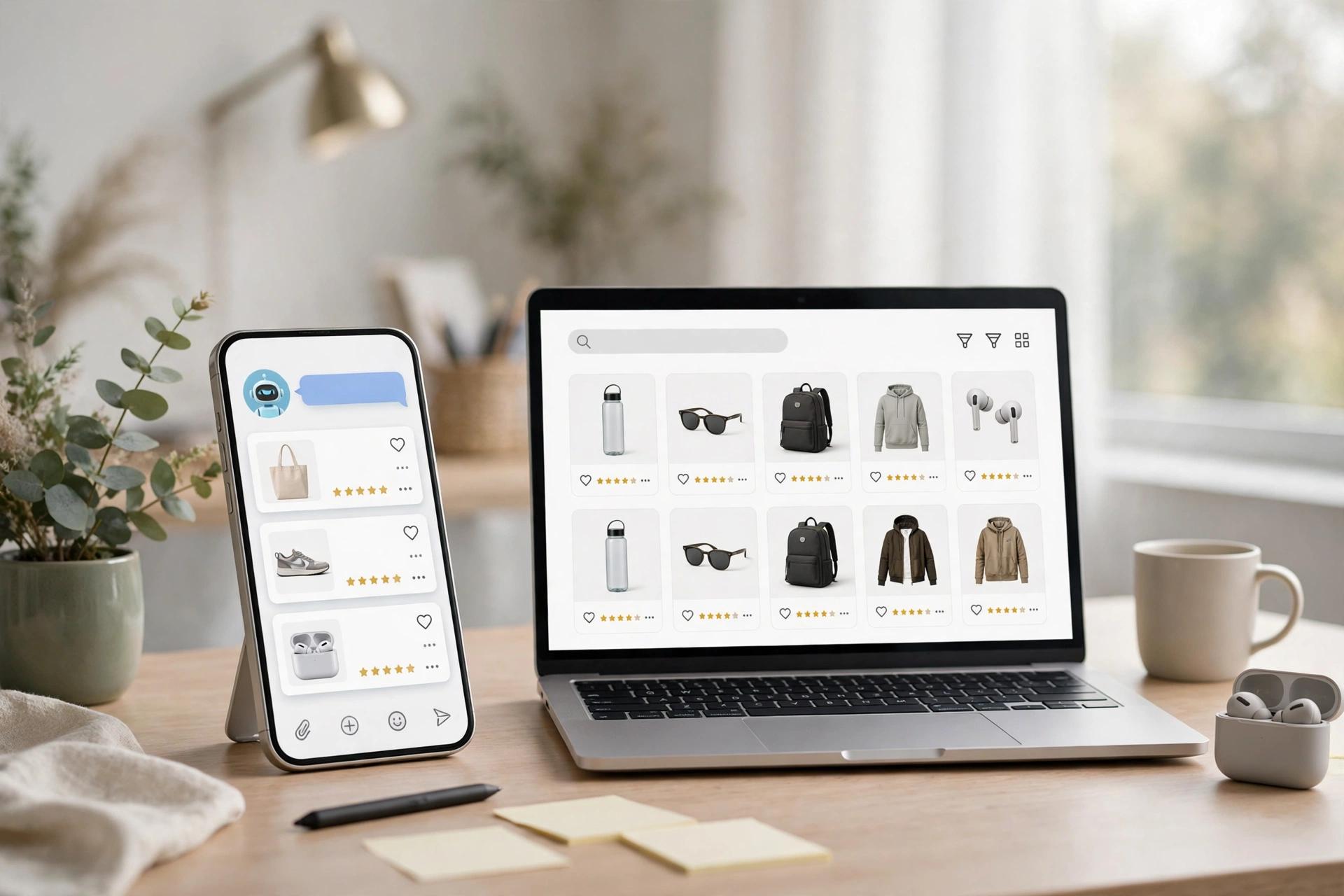
An online store loses most of its sales after the customer has already decided to buy. They add a product to the cart, they get distracted, they have a question about delivery or sizing, and they never come back. The store owner never knows, because nobody asked. This is the problem an AI chatbot solves for ecommerce. It is not a gimmick on the corner of the page. It is a member of staff who works all night, answers the questions that stop people buying, reminds the ones who left, and brings them back to finish the order. This guide explains what an AI chatbot does for an ecommerce store, in plain terms: abandoned carts, order tracking, product questions, and WhatsApp follow-up, and what it costs to have one working properly.
The short answer
An AI chatbot for ecommerce pays for itself by recovering abandoned carts, answering order and product questions instantly, and following up past customers on WhatsApp. The average store loses around seven in ten carts before checkout, and a chatbot that messages the customer within the hour, answers the question that stopped them, and offers a simple way back to the cart can recover a meaningful share of them. At CINEM, an AI chatbot starts from $999 setup plus $299 per month, and it works on your website and on WhatsApp, answers from your product catalogue and your delivery and returns policies, and hands the conversation to your team when a human is needed. The honest rule is simple: a chatbot is worth it when the orders it recovers and the hours it saves are worth more than $299 a month, which for most stores doing regular daily orders is true within the first month. If you want the wider picture on what a store costs to build, our related post Ecommerce website cost: what an online store really costs covers the build, and our related post Shopify vs WooCommerce: which costs less over 3 years? compares the two platforms most stores run on.
Abandoned carts: the money already on the table
The biggest job of an ecommerce chatbot is also the most valuable: recovering abandoned carts. A customer who added a product to their cart has already done the hard part. They found the store, they chose the product, and they were ready to pay. Then something stopped them: the delivery charge, a question about the size, a payment method they did not trust, or simply a distraction. Most stores do nothing about this. They send one email, if they send anything at all, and the customer never comes back. A chatbot changes the pattern. When a cart is abandoned, it can message the customer on WhatsApp within the hour, while the purchase is still fresh in their mind, and ask the question that matters: was it the delivery charge, the size, or something else. If it was a question, the chatbot answers it, from the product information and the delivery and returns policies you have given it. If it was the delivery charge, it can explain the options, including free delivery above a threshold, which is often enough to bring the customer back. And it can send a simple link that takes the customer straight back to their cart, with the product still in it. The conversation feels like a helpful message from the shop, not a marketing email, because it arrives on WhatsApp, where the customer already talks to people. The result is not magic. It is a share of the carts that would otherwise have been lost, recovered, every week, without your team lifting a finger.
Order tracking and the questions that eat your day
The second job of an ecommerce chatbot is the one that saves your team the most time: answering the questions that arrive all day, every day, and that all have the same answers. Where is my order. When will it arrive. Can I change the delivery address. How do I return this. What is your refund policy. For a busy store, these messages are a full-time job, and they arrive at night, at weekends, and during holidays, when nobody is there to answer them. A chatbot answers them instantly, because it is connected to your order system and your policies. It looks up the order number, tells the customer where the parcel is, and what happens next. It explains the return process, and starts it, without a member of staff reading the same message for the hundredth time. And when the question is unusual, or the customer is unhappy, it hands the conversation to a human, with the order details and the conversation so far attached, so your team does not have to ask the customer to repeat everything. The point is not to remove humans from customer service. It is to remove the repetitive questions from humans, so the humans are free for the customers who actually need one. A store that answers in seconds, at midnight, feels more reliable than a store that answers the next morning, and reliability is what turns a first order into a second one.
Product questions that sell
The third job of an ecommerce chatbot is the one closest to selling: answering product questions before the customer buys. A customer looking at a product has questions that a product page rarely answers fully. Will this fit a 32-inch waist. Is this compatible with my phone. What is the difference between these two models. Which one is better for a gift. How long does the battery last. If the answer is not there, the customer leaves, and you never know they were there. A chatbot answers from your product catalogue, which means it knows the sizes, the specifications, the colours, the stock, and the price, and it can compare two products side by side, recommend the right one for the customer's need, and suggest a matching product to go with it. It can also check stock and delivery times, so it never recommends something that is not available. This is the same job a good shop assistant does in a physical shop, and it is the job most online stores leave undone, because nobody is there to do it. A chatbot that answers product questions well does not feel like a machine. It feels like a shop that knows its products, and customers buy from shops that know their products. The difference between a store with a chatbot and a store without one is often the difference between a visitor who leaves and a visitor who buys.
WhatsApp follow-up and repeat orders
The fourth job of an ecommerce chatbot is the one that builds the business over time: bringing past customers back. A store that only sells to new customers is always starting again, and acquiring a new customer costs far more than selling to one who already trusts you. A chatbot on WhatsApp can follow up after a delivery, ask how the product is, and offer help if there is a problem, which is the moment a customer decides whether to come back. It can remind a customer when it is time to reorder, which matters for products people buy regularly, such as skincare, supplements, pet food, or coffee. It can tell past customers about a new arrival that matches what they bought before, or about a sale, without spamming everyone with the same message. And it can ask for a review at the right moment, after the customer has had the product for a few days, which builds the social proof that brings in the next customer. All of this happens on WhatsApp, where the customer already is, and it happens automatically, which means it actually happens, unlike the follow-up most stores plan to do and never get around to. A store with a chatbot does not only recover more carts. It builds a list of customers who buy again, and that list is the most valuable asset the store has.
What a chatbot costs and what it should do
An ecommerce chatbot is a small investment next to the orders it recovers, but only if it is built properly, so it is worth knowing what to check. At CINEM, an AI chatbot starts from $999 setup plus $299 per month. The setup is the work that makes the difference: connecting the chatbot to your product catalogue, your order system, and your delivery and returns policies, so its answers are accurate and specific to your store, not generic. A chatbot that guesses, or that gives a wrong delivery time, is worse than no chatbot at all, because it creates a problem your team has to fix. The monthly cost covers the running, the updates, and the improvements: new products, new policies, and the conversations that show where customers are getting stuck. Before you buy one, ask what it connects to, how it handles a question it cannot answer, and how quickly a human can take over. The answer to the first question should name your store, your products, and your orders. The answer to the second should be that it says so honestly and offers a human, rather than guessing. And the answer to the third should be immediately, with the conversation history attached. If your customers mostly call rather than message, an AI calling agent from $1,499 setup plus $399 per month can answer those calls and take orders when your team is busy. The channel matters less than the speed. A customer who gets an answer in seconds is a customer who stays with you.
Frequently asked questions
How does an AI chatbot recover abandoned carts?
When a customer leaves without checking out, the chatbot messages them on WhatsApp within the hour, asks what stopped them, answers the question from your product and delivery information, and sends a link straight back to their cart. It recovers the carts that were lost to a question or a distraction, not the ones that were never going to buy.
Can a chatbot track my customers' orders?
Yes, if it is connected to your order system. It looks up the order number, tells the customer where the parcel is, and explains what happens next. It can also handle delivery address changes and start returns, and it hands the conversation to a human when the question is unusual or the customer is unhappy.
Will a chatbot work on WhatsApp as well as my website?
Yes. Most ecommerce customers prefer WhatsApp, especially in Pakistan, the UAE and India, so the chatbot should work on both. A customer who starts on the website and continues on WhatsApp should not have to repeat themselves, and the conversation history should follow them.
What does an AI chatbot for ecommerce cost?
At CINEM, an AI chatbot starts from $999 setup plus $299 per month. The setup connects it to your product catalogue, order system and policies. The monthly cost covers running, updates and improvements. For most stores doing regular daily orders, the recovered carts alone cover the cost within the first month.
What happens when the chatbot cannot answer a question?
It should say so honestly and offer a human, rather than guessing. A wrong answer creates a problem your team has to fix. The conversation, with the order details and everything said so far, is handed to your team, so the customer does not have to repeat themselves.
If you run an online store and your carts are being abandoned, your team is drowning in order questions, or your past customers never come back, it is worth an honest conversation before you spend anything. Tell CINEM at hello@cinem.tech what you sell, how many orders you take in a month, and where your customers message you. We will show you what a chatbot would do for your store, from a focused setup at $999 plus $299 a month, and price it honestly, with the running costs included.